Academy / Licenses
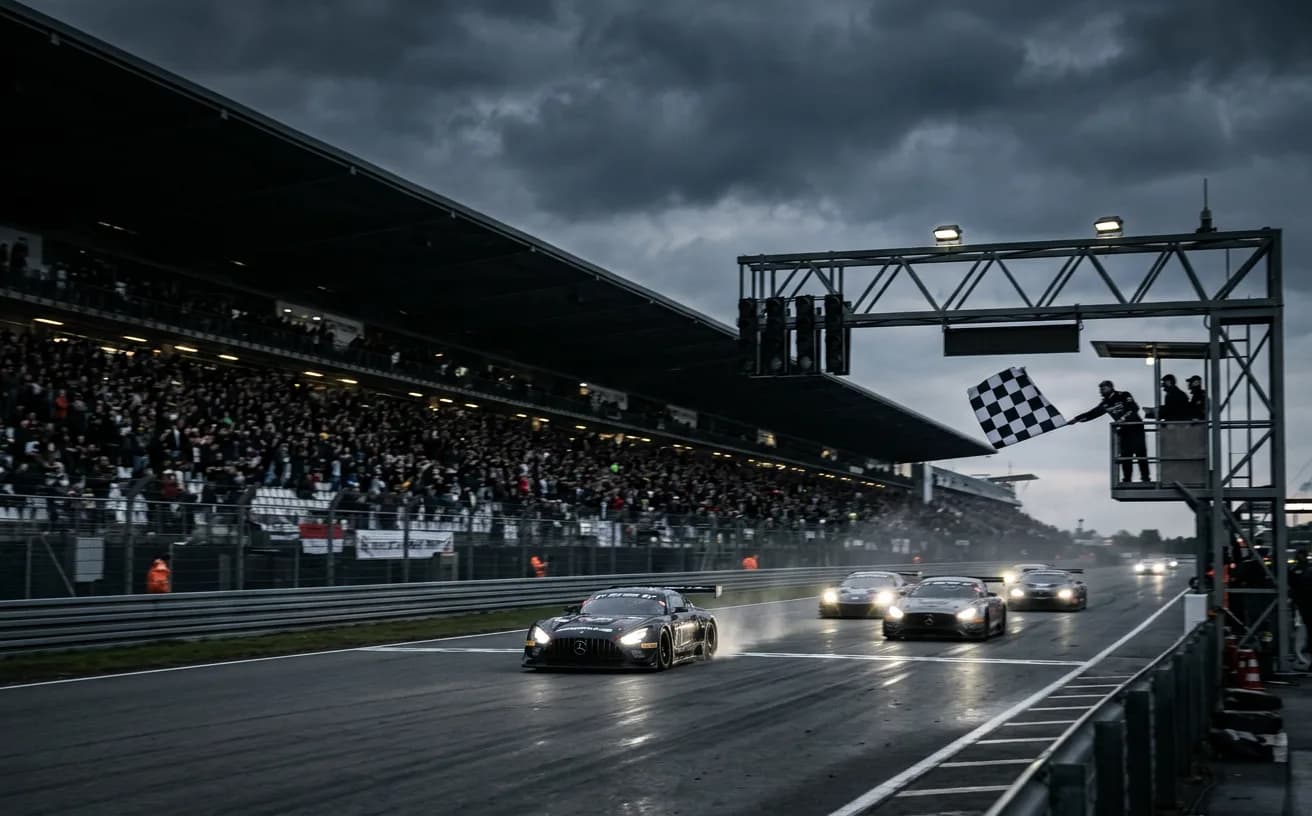
In iRacing, fault isn't judged, facts are. If a driver brakes too late and crashes into you, it's a 4x for both of you even if it wasn't your fault. It's not the fairest system, but over time it puts everyone where they belong.
What Safety Rating is in 60 seconds
Safety Rating (SR) is a number between 0.00 and 4.99 that measures how clean you are on track. It doesn't measure speed, it doesn't measure wins, it doesn't measure results. Just one thing: how many incidents you rack up per corner you complete.
The highlighted number on each license is your Safety Rating. Each discipline tracks it separately.
Three things you need to know right away:
- It's independent per discipline. You can have a 4.00 in Sports Car Racing and a 1.50 in Oval. Each one is tracked separately: Sports Car Racing, Formula Racing, Oval, Dirt Road, Dirt Oval.
- It determines your license. Rookie → Class D → C → B → A → Pro/WC. Moving up unlocks better series.
- It's a moving average over your last ~1,000 official corners. It doesn't start from zero each race nor stack up forever from day one. It remembers the recent more than the old.
If you stick with these three points, you've got the idea. If you want to go deeper into how it's calculated, the rules of the incident system, the per-race limit, and how promotion works, keep reading. But first, what you really want to know: how to raise it.
How to raise your Safety Rating
First compete with yourself, then compete with others.
Curiously, the more you chase Safety Rating, the less you progress. It's a mindset shift: it's not about racing against others, it's about racing against yourself. If you get caught up fighting other drivers before earning yourself first, you're doomed. You'll make mistakes and have accidents that bury your SR.
What does earning yourself mean? Becoming consistent. Not making mistakes. Learning the racing line when you're alone, and when there are other cars around forcing you to change it. Once you nail that, then you compete with others.
This isn't empty philosophy. It's the difference between climbing from Rookie to Class A and getting stuck in Class D wondering why you're not moving up.
Five things that work
1. Get familiar with the track before racing the series. If you already know the track, skip to point 2. If not, pick the Mazda MX-5 or the Toyota GR86 and run several laps to learn the racing line. Why these cars? Because they let you drive at a comfortable pace (something a GT3 doesn't allow), they're forgiving to drive, and they prevent mistakes like overshooting braking zones or losing control while you're still figuring out where each corner goes.
2. Now yes, practice with the car you're going to race. At least 30-60 minutes on the week's track. Practice session or Time Trial. If you don't know the line on your own, you sure won't know it with 20 cars around you.
3. Run several laps with other cars on track. Your braking reference isn't the same when you're side-by-side with another driver into a tight corner. With traffic, lines change, brake points shift, corner exits get messy. Jump into Rookie or D races without worrying about the result—just the learning.
4. Accept losing positions. It's about winning the war, not the battle. Better to finish 8th clean than 4th with a 14x. Your SR doesn't care what position you finished. It only knows how many corners you completed without screwing up.
5. Take advantage of fast cars and tracks with lots of corners. Here's the hack few people know: SR depends on the Corners Per Incident ratio, so the more corners you complete per hour, the faster your SR climbs. A GT3 you feel confident in (Mercedes AMG, Lamborghini Huracán) at Nordschleife completes way more corners than a Mazda MX-5 at Lime Rock. If you string together clean laps, you gain SR at a completely different pace. Real example: the Ring Meister series runs at Nordschleife every week and changes the car each week—perfect for racking up corners and learning the track inside out.
Bonus: use Time Trials to gain SR risk-free. Progress is slower but you avoid the human factor of other drivers. What counts as 1x in a race counts as 0.35x in Time Trial. Minimum risk, guaranteed gain. I know, it's more boring, but it's important to know this option exists.
Mistakes that hurt your SR the most
The classics I see every week:
- Trying to win the race in the first corner. Trust me, you don't win there. The only thing guaranteed is that you can lose the race in the first corner if you're not careful. And sometimes, even when you are careful, there's a driver playing bowling with you and everyone else. Imagine how critical that moment is, that on top of everything else there's one more "hazard"—please, don't be it.
- Pushing 100% on cold tires. On the first lap with cold tires you have to adapt your driving, and until you understand that, you'll be Class D forever.
- Not reading the race and fighting at every corner. Sometimes it's better to draft and move up as a group. The fight for position comes at the end.
- Not checking your mirrors. Seems obvious, but you're not racing alone, and it's important to know what's happening around you. Most importantly: anticipating other drivers' mistakes.
- Taking a corner without leaving room for other drivers. This is basic physics: if there's a car on the inside, you have to open up the line to give them space. If you turn straight to the apex, there's a guaranteed accident. Never fails.
- Overdriving. You don't go faster by braking later than everyone else or attacking a curb more aggressively. In fact, that hurts your lap time. First find your rhythm and gain tenths one at a time.
- Passing a clearly slower car anywhere on track. Yes, they're slower and you'll get past them. But it's better to wait 2 or 3 corners for the right moment than to try to force it. That's the surest way to earn a 4x. Wait for your moment.
What happens if you lose SR
There are two ways to drop a class:
- End of season with SR < 2.00: you drop a class automatically.
- At any moment with SR < 1.00: you drop immediately. This is rare but happens if you collect 4x's.
If at the end of the season you're between 2.00 and 3.00, your license isn't affected. You're in the gray zone: no promotion, no demotion. But careful: it's not a comfort zone either. It's the gateway to dropping if you slip up.
How the system works in detail
Up to here, the actionable part. What comes next is the detailed mechanics. If you only wanted the idea, you've already got the most important. If you want to understand why things happen the way they do, keep reading.
How it's calculated
iRacing uses three factors:
- Incident points — how many incidents you pick up in a session.
- Corner count — how many corners you complete. Here's the trick: long, complex tracks like Nordschleife weigh more than a short oval. More corners = more opportunities to get it right (or wrong).
- Session type — official races count at 100%. Time Trials multiply your incidents by 0.35.
Fun fact: every time you cross a whole number upward (1.00, 2.00, 3.00, 4.00), iRacing gives you a +0.40 SR bonus. And vice versa: if you drop below a whole number, it penalizes you with -0.40. Why? To prevent you from oscillating right at a critical threshold. It's a buffer.
SR has memory (but not forever)
Something most people don't know: SR isn't calculated race by race in isolation, nor is it a running total accumulated since day one. It's a moving average over your last ~1,000 corners in official sessions, which works out to roughly your last 10 races.
Why does this matter?
- If you have little history, every incident hits hard. A bad race in your first days tanks your SR mercilessly. It's what frustrates Rookies the most: a single crash can represent 10% of your entire history.
- If you have hundreds of clean corners under your belt, an isolated 4x barely moves the needle. That's the reward for consistency: the more clean corners behind you, the bigger the buffer to absorb the occasional mistake.
- Recent corners weigh more than old ones. A bad day this week affects you more than one from weeks ago.
The practical takeaway: if one bad afternoon tanks your SR, you're not marked for life. Ten clean races later, you'll be back. The system doesn't punish forever, but it does demand consistency.
The incident system: 1x, 2x, 4x
Not all mistakes are punished equally. iRacing has four types of incidents, with three different weights:
- 1x — You go off track (two wheels out). Doesn't count if you're going slow.
- 2x — You lose control without hitting anything, or light contact with an object.
- 4x — Contact with another car or serious impact with an object.
There's a detail that confuses almost everyone: the maximum per incident is 4x. It doesn't stack. If you commit a 2x and half a second later it cascades into another 2x from the same situation (classic: you go off, try to come back, hit someone), iRacing only counts the 4x. It doesn't add up to 2+2+4=8.
This only applies within a very short window. If several seconds pass between incidents, the logic resets and they count separately.
And a key detail many learn the hard way: if you lightly touch another driver (a 2x for you), but that driver ends up losing control and crashing, iRacing assigns you an inherited 4x. The system doesn't judge fault, it judges the result. If your action started a chain that ended in a crash, the maximum weight is yours. That's why "I barely brushed them" doesn't fly: if the rebound ends badly, you're the one who pays.
The incident limit and disqualification
This is critical and most new players don't know it until it happens to them: iRacing has a maximum incident limit per race. If you exceed it, you're disqualified automatically. And disqualification in iRacing means exactly that: you're kicked out of the race, literally sent back to the iRacing main menu, unable to keep racing. Race over, end of story. You lose the race and, on top of that, you've trashed your SR.
The exact number varies by series and event. The important thing is knowing it exists and checking it before each race (you'll find it in the event description).
In standard races (sprint):
The typical limit is 17 incidents. The official iRacing Sporting Code uses this number as a reference example. You hit 17x and you're out. No warnings, no second chance, no negotiation. In most weekly series, this is the threshold you'll be living with.
In endurance races:
Example: 24h Spa. Numbers vary by endurance event.
Here the system is different, and for good reason: a 24-hour race with a team sharing a car racks up far more mileage and far more risk than a 45-minute sprint. It would be absurd to disqualify an entire team for exceeding 17 incidents over 24 hours.
What iRacing does in these cases is a tiered penalty system before the final disqualification. For example, in the 24 Hours of Spa, you're allowed up to 100 incidents before the first stop-and-go penalty kicks in. From there, every additional 20 incidents triggers another mandatory stop. And only once you cross a very high threshold does disqualification come.
Each endurance event publishes its own numbers, but the pattern is always the same: warnings first (stop-and-go), disqualification at the end.
What matters for your SR:
Here's the key thing most people miss: even if you don't hit the disqualification limit, every incident still counts toward your SR. Finishing a race with 14x when the limit is 17x doesn't get you kicked, but it tanks your Corners Per Incident average mercilessly.
SR gets billed long before the official limit. That's why a "saved" race where you finished one incident away from disqualification isn't a win: it's bleeding dressed up as an achievement.
Licenses and how promotion works
This is what most people are looking for—and what most people get wrong:
One curiosity before we move on: if you ever see a driver with "Pro/WC" next to their name, that's not a level you can work your way up to by raising SR. It's an invitation-only license reserved for the world's top drivers, roughly 30-50 drivers per category. It exists in open-wheel, sports cars, dirt oval, and NASCAR, and the only way in is finishing among the best in the Pro Series. Fun detail: if one of these drivers drops below 1.0 SR, they also lose the license temporarily. Not even the world's top is immune to the basic rule.
There are two ways to promote:
- End of season: if you meet your class's minimum SR + the MPR (Minimum Participation Requirements, basically: race enough), you move up a class automatically.
- Fast Track: if you hit 4.00 SR before the end of the season (3.00 if you're in Rookie), you promote immediately without waiting.
When you promote, your SR drops by about 1.00 point. It's not a penalty: it's a reset so you have breathing room in the new class. If you move up to Class B with 4.00, you start at 3.00. Space to learn without losing the license you just earned.
If you've made it this far, congrats: you already know more than 90% of drivers. You know how the system works, where the hacks are, and what mistakes to avoid. The only thing left is consistency.
First compete with yourself. Then compete with others.